
Selected Research
Embodied AI · Multi-Robot Systems
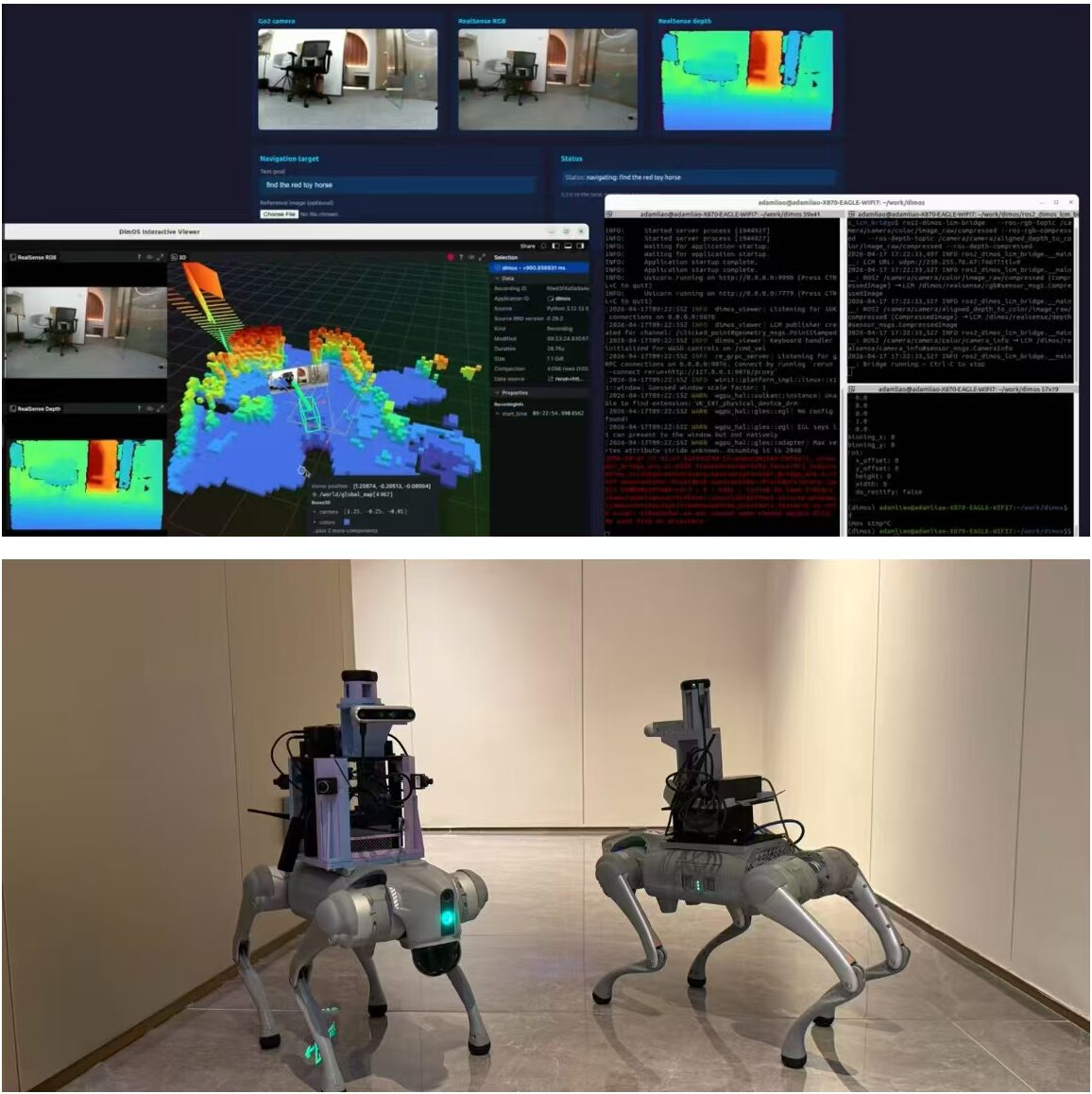
Decentralized Multi-Robot Vision-Language Navigation
This project investigates decentralized multi-robot collaborative vision-language navigation in complex, cluttered, and partially observable environments. By leveraging cross-agent semantic grounding and distributed subgoal coordination, the approach mitigates perceptual bottlenecks and perceptual aliasing in single-agent embodied navigation systems, improving task success rate, trajectory efficiency, and cross-scenario generalization for real-world deployments.
Teleoperation · Human-Robot Interaction
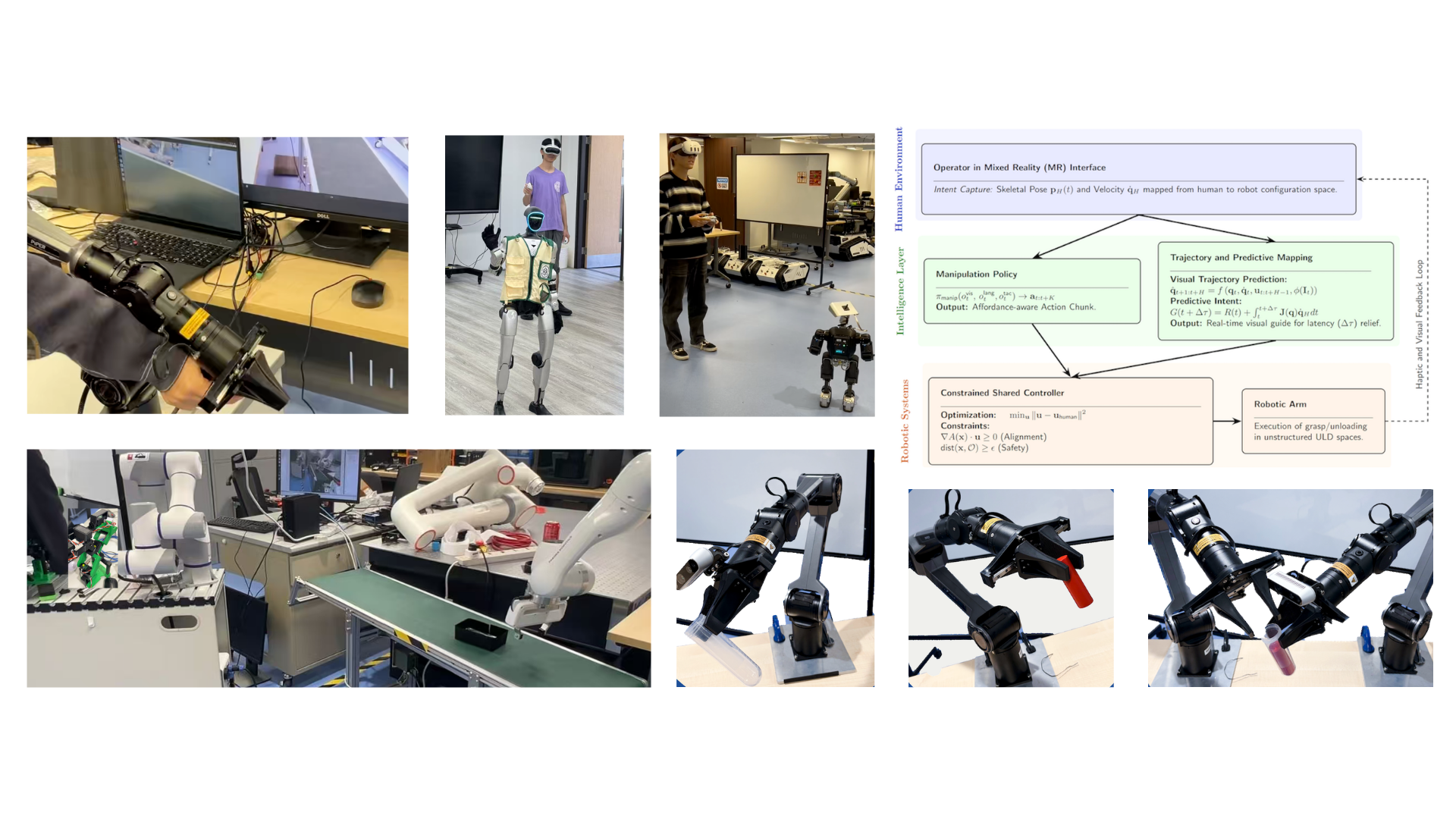
Adaptive Teleoperation for Embodied Robotic Platforms
This project studies teleoperation for robotic arms and mobile robots under uncertainty, latency, and partial observability. By combining human intent inference, multimodal perception, adaptive control, and shared autonomy, the system aims to reduce operator workload while preserving human decision authority. This research supports safer and more robust remote manipulation and navigation in hazardous, complex, or hard-to-access environments.
Spatial Reasoning · Occluded Manipulation
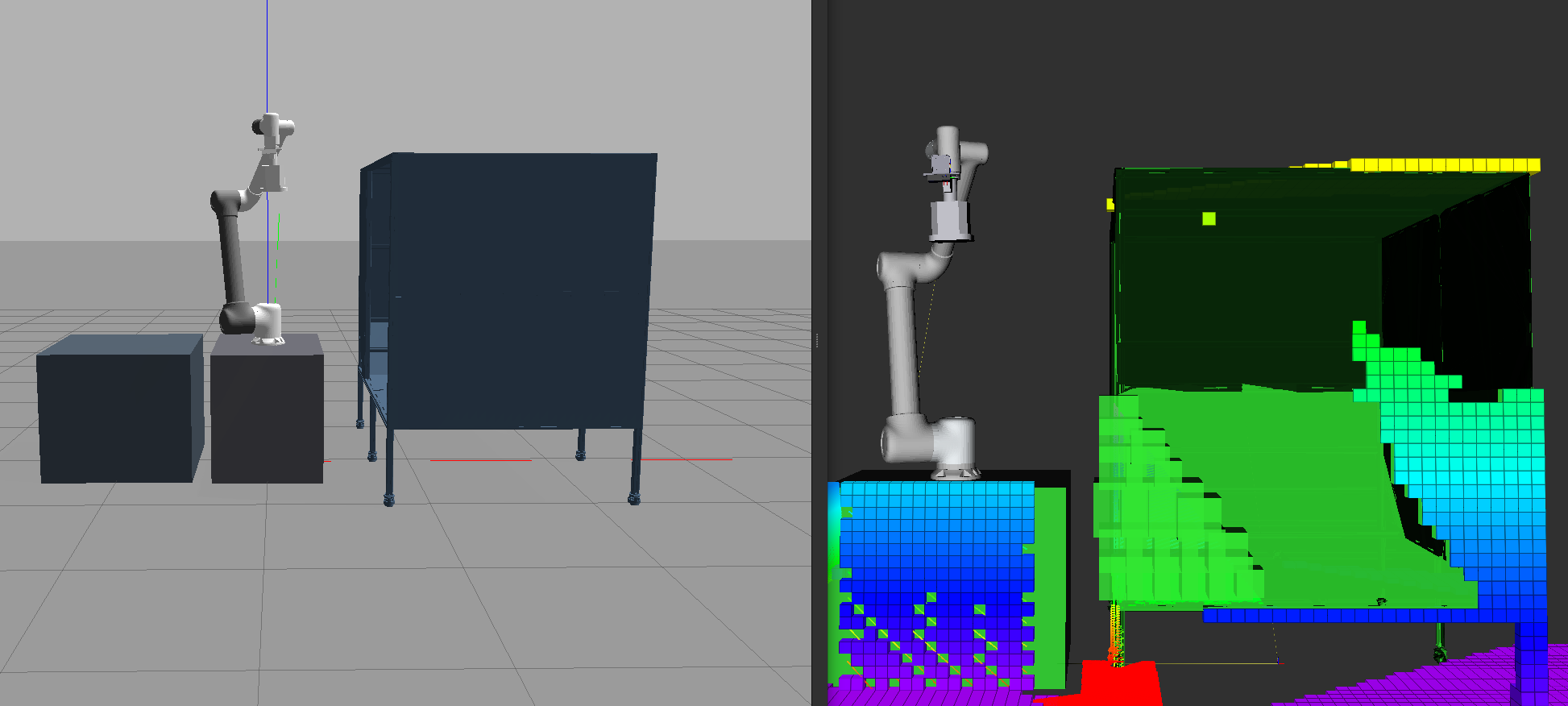
End-to-End Planning for Autonomous Cargo Loading
This project investigates autonomous loading of arbitrary objects into closed, space-constrained containers, framed as a closed-loop spatial-reasoning problem under heavy occlusion and partial observability. From a single eye-in-hand depth stream, the system continuously reconstructs and updates a 3D representation of the cargo space, enabling embodied spatial understanding of where each incoming item can be safely admitted. Placement reasoning and collision-aware trajectory generation are coupled in a single perceive–reason–act loop, so the manipulator commits motions that are feasible end-to-end from perception to execution.
Multi-Robot Coordination · Legged Robotics
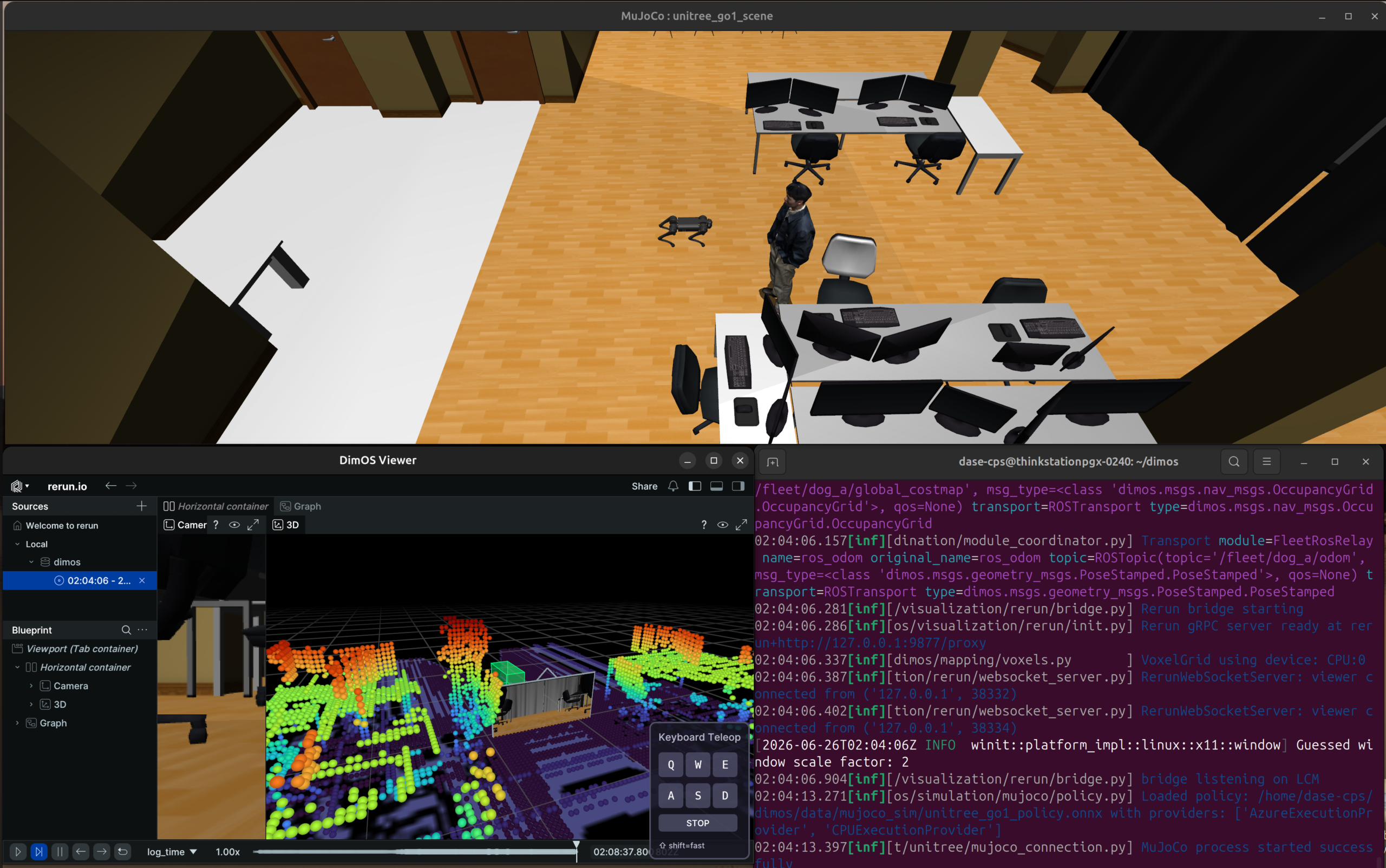
Formation Control for Multiple Quadruped Robots
This project investigates formation control for multiple quadruped robots in a shared environment, leveraging multimodal visual and radar perception, inter-robot communication, and a multi-agent task coordination framework to enhance perceptual awareness and inter-agent coordination, and enhance formation stability, cooperative task efficiency, and autonomous execution capability for real-world deployments.
Large Language Models · Financial Intelligence
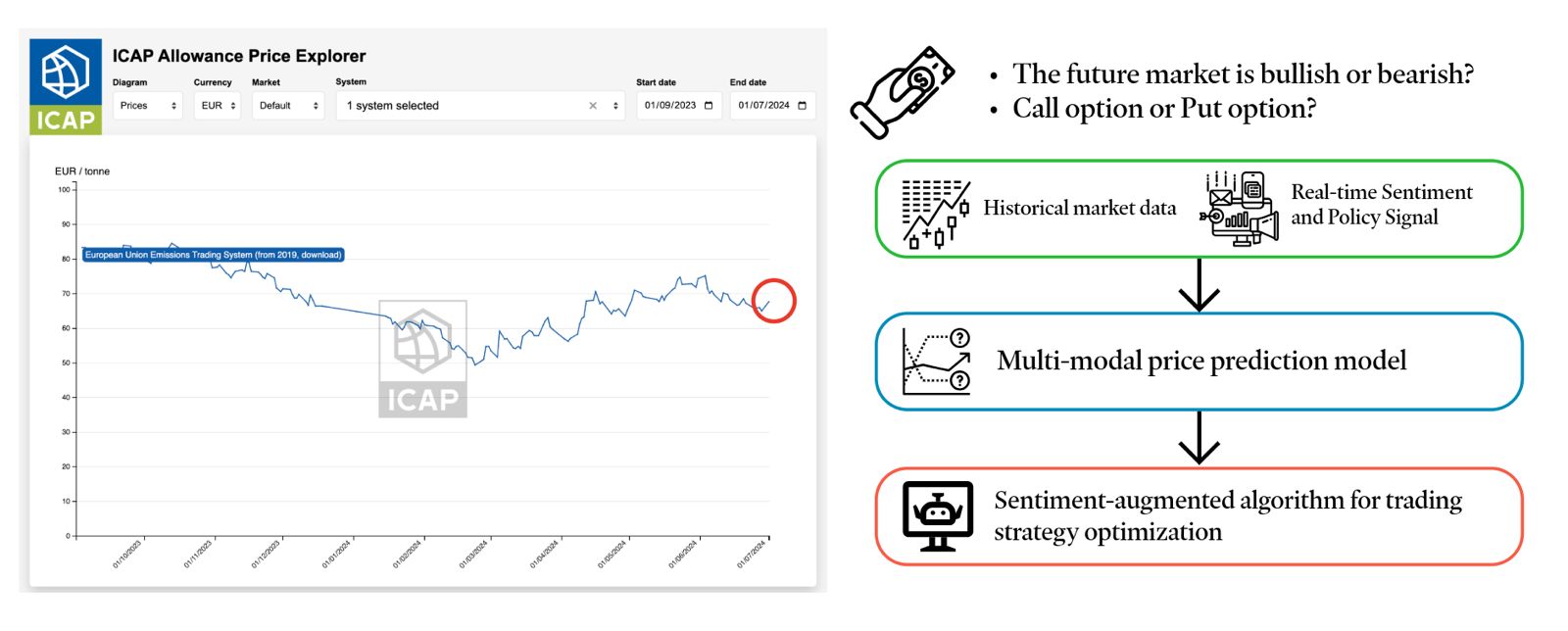
Sentiment-Augmented Trading Strategy Optimization
This project studies the computational methodologies to bridge qualitative linguistic cues with traditional predictive modeling frameworks. By leveraging Large Language Models, we collect dynamic fluctuations in market sentiments and policy shifts. This approach aims to extract actionable insights from unstructured textual data, enabling more adaptive strategies for navigating volatility and systemic risk in economic systems. Ultimately, sentiment-driven research provides a robust foundation for enhancing decision-making precision and strategic planning across complex, information-heavy environments.